

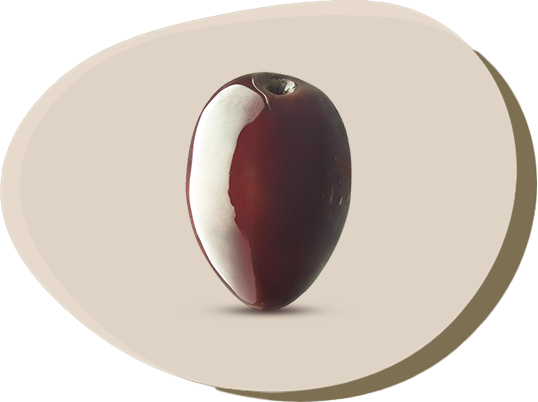
Kalamata Olives
Botanical name
Olea europea var. Kalamon, also known as Kalamata.
Origin
Greece, mainly Central Greece and the southern Peloponnese.
Harvest period
Although dual-purpose, Kalamata is cultivated mainly as a black table olive, processed using the Greek method (in brine acidified with vinegar), either crushed or slit. In Greece it accounts for about 20% of the olive-growing area. The harvest period for table olives begins when the fruit is fully ripe, after veraison. For oil production, depending on ripening, harvest takes place from October to December.
Food pairings
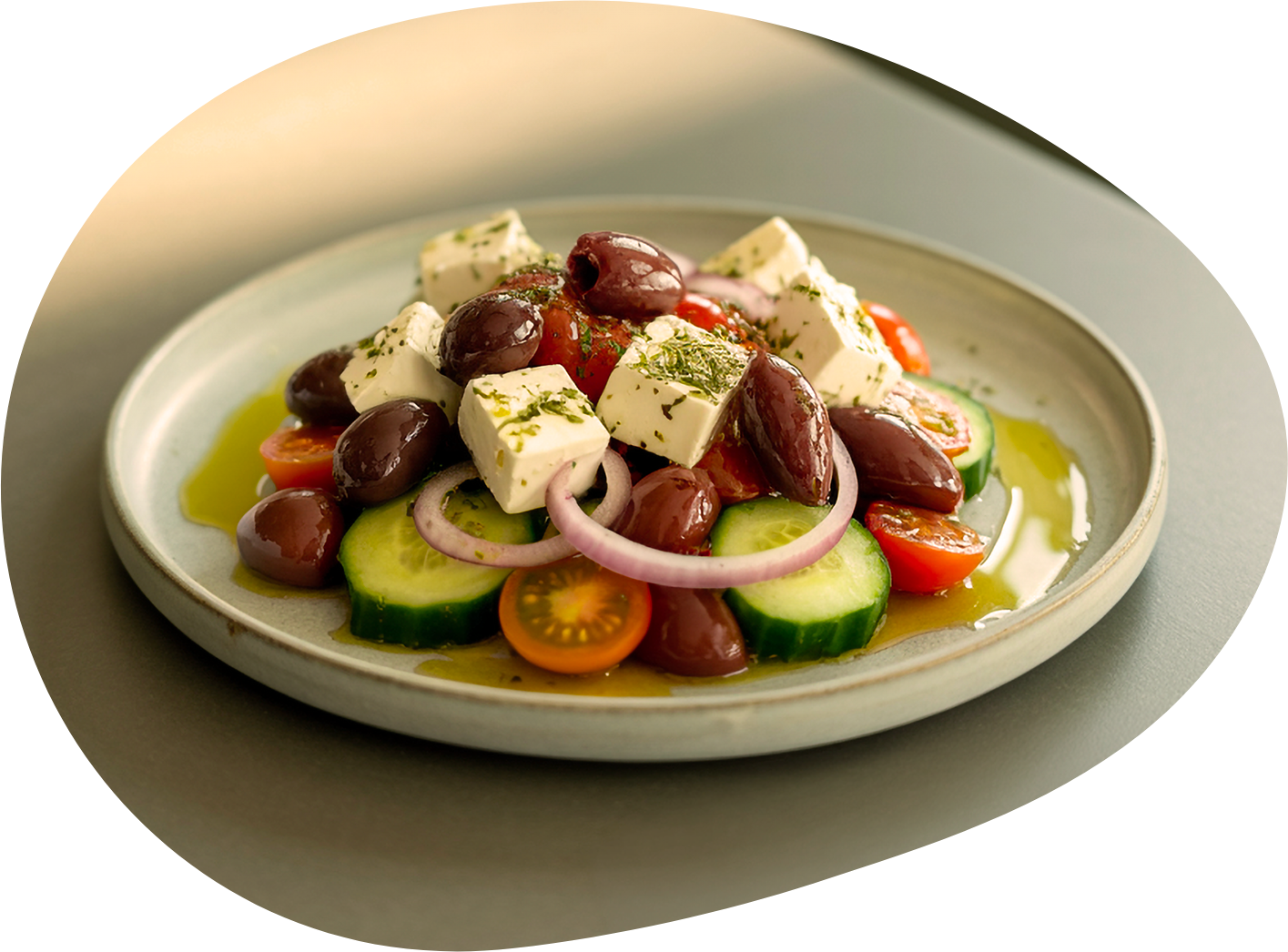
They can be eaten on their own, dressed with simply a drizzle of extra virgin olive oil and a few aromatic herbs: oregano, thyme, rosemary and basil. Adding some tomatoes and placing them on toasted bread will make for an excellent bruschetta. They pair beautifully with fresh cheeses such as Greek feta, mozzarella and ricotta. Kalamata is the key ingredient in Greek salad with tomatoes, cucumbers, red onion and feta; it can also be added to mixed salads with fresh or grilled vegetables, tuna, legumes, grains, pasta or rice. They are also an excellent ingredient in tomato-based pasta sauces, vegetable or fish sauces; in stews, baked or pan-cooked dishes with white meats and fish; and in pizzas and focaccias. Finally, they can be used as fillings for savoury pies or baked stuffed vegetables.
Drink pairings
: Given the variety of dishes in which it can be used, it is difficult to give general guidelines for pairing Kalamon olives. Since the traditional recipe for preservation involves vinegar, a wine with a certain softness and slight sweetness may balance its acidity. Another option is to pair it with highly aromatic wines that can override the vinegary notes. Specifically: Pinot Grigio or unoaked Chardonnay, or a slightly off-dry Riesling. For something more original, an amabile Lambrusco.
Characteristics
The Kalamon olive is medium-sized, with a distinctive and easily recognisable shape: elongated, asymmetrical, with a pointed apex. Even in morphological studies on drupe and stone characteristics, Kalamon often forms a separate group, together with only a few other olive varieties. The drupes withstand processing and handling well; they can be cured in various ways but always as black olives, retaining their colour very well. The skin shows numerous small lenticels, has a high flesh-to-stone ratio, and the flesh detaches easily. The tree is fairly vigorous, with upward-growing branches, productive and resistant to the olive fruit fly. It has medium tolerance to cold climates and is sensitive to excessively hot ones. The best source of nitrogen for this variety is urea, especially in intensive olive groves where a substantial intake is required.
Did you know…
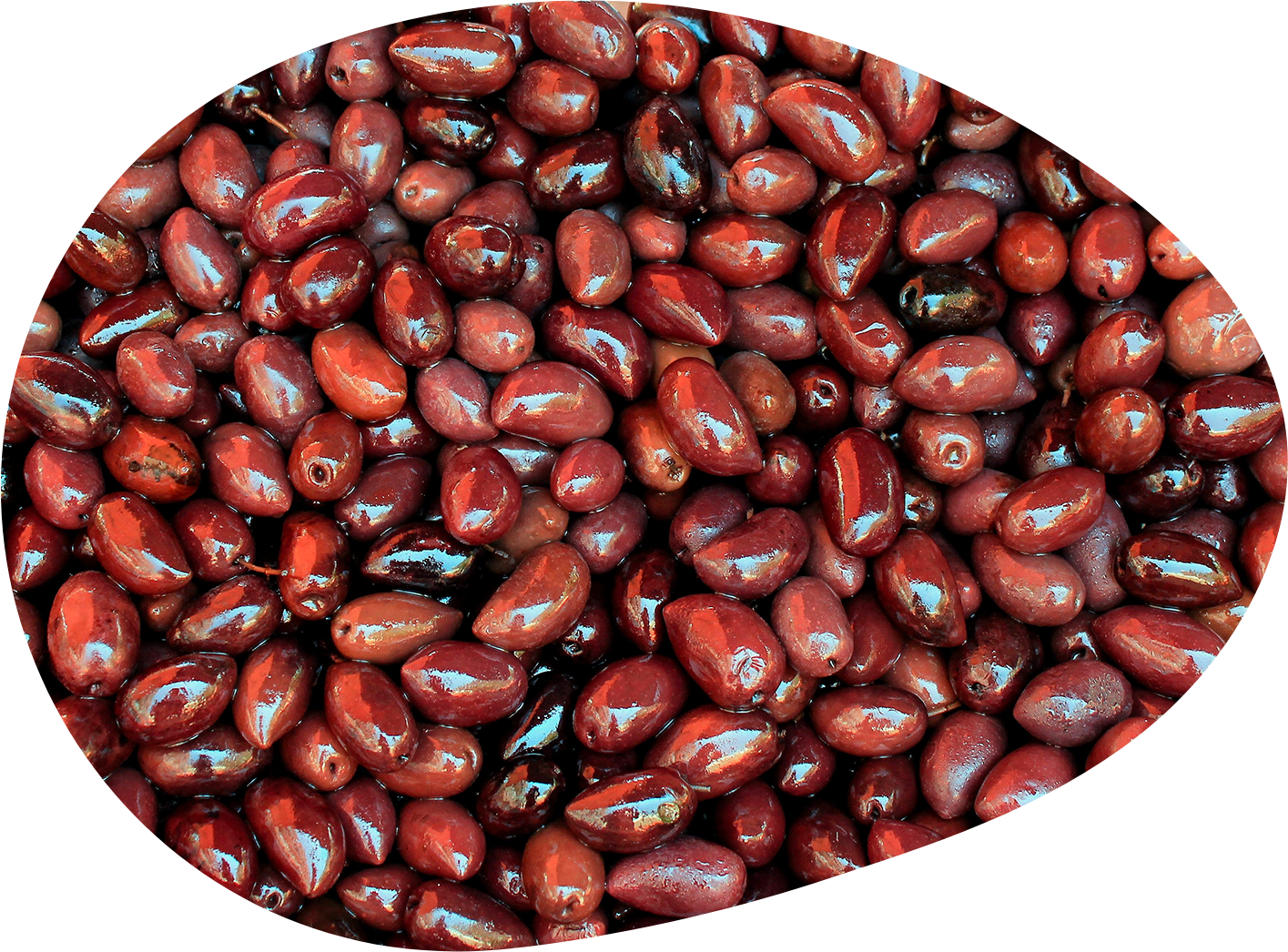
The Kalamon olive takes its name from the city of Kalamata, which is the capital of Messenia and an important commercial port for the entire region. It is perhaps the most internationally renowned table olive variety. One of the largest olive-sector fairs in the Mediterranean area – “Olive Oil and Olives Festival” – is held at the Traffic Education Park of Kalamata. Since Kalamata has obtained PDO recognition from the European Union, both as extra virgin olive oil and as a table olive, numerous scientific studies have been conducted to develop methods for characterising these products, with the aim of ensuring their authenticity and preventing the spread of food fraud.
A fermented Kalamon olive extract was experimentally obtained in order to study its nutraceutical effects. This extract contained only antioxidants (tyrosol, hydroxytyrosol) and lactic acid, while fats, salt and water were removed. In a 30-day pilot study conducted on 48 subjects, a quantity of extract equivalent to just five fermented olives was shown to reduce total cholesterol and LDL cholesterol by about 5%. Another study focused on recovering these and other biophenols directly from the fermentation brine, again in the form of an extract. The latter showed protective capacity against the action of free radicals, particularly on cellular DNA.
Further studies have concentrated on the use of starter cultures, yielding clear evidence of improvements in food safety parameters, the shelf life of packaged products and processing conditions.


