

Bella di Cerignola Olives
Botanical name
Olea europea var. Oliva di Cerignola known as Bella di Cerignola.
Origin
Italy, Apulia, particularly the province of Foggia.
Harvest period
Bella di Cerignola is a cultivar specifically intended for curing. Harvesting generally takes place when the olives are still green. They must be picked green since not only are the olives normally treated with lye to remove bitterness (Sevillian method), they are also often blackened following the Californian method. The latter in particular subjects the flesh to considerable chemical and mechanical stress; overly ripe olives would not withstand the process.
Food pairings
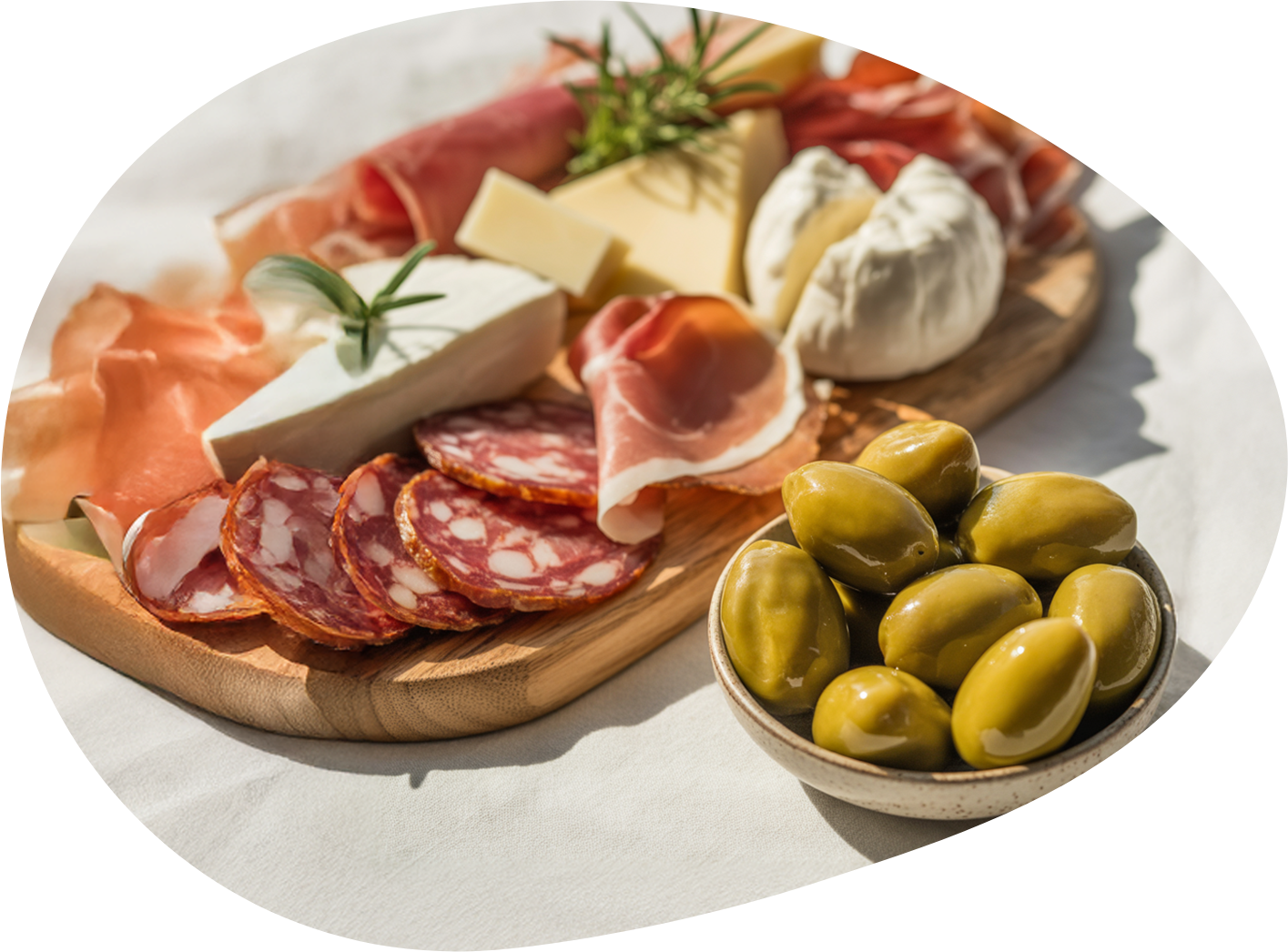
Given its traditional lye treatment, which creates a distinctive aromatic profile and a delicate flavour, Bella di Cerignola is not normally used as an ingredient in long-cooked dishes. It can be paired with various local products such as cheeses and cured meats, or with fresh vegetable dishes like salads, tapenades and crudités (pinzimonio). Given its size, it can also be stuffed “Ascolana-style”, with the same filling or with milder-tasting ingredients.
Drink pairings
Excellent on its own with plain water – sparkling if you like – with a squeeze of lemon, or with freshly pressed orange juice, using oranges harvested mid-winter and thus less sweet and more acidic. It also pairs perfectly with Pilsner and Lager beers, provided they are not overly hopped. As for wines: a lightly sparkling Salice Salentino, or a Bombino Bianco with citrus notes; the key is for the wine to be fresh and light. Also worth trying with a Martini cocktail – perhaps in an extra-large version of the classic glass!
Characteristics
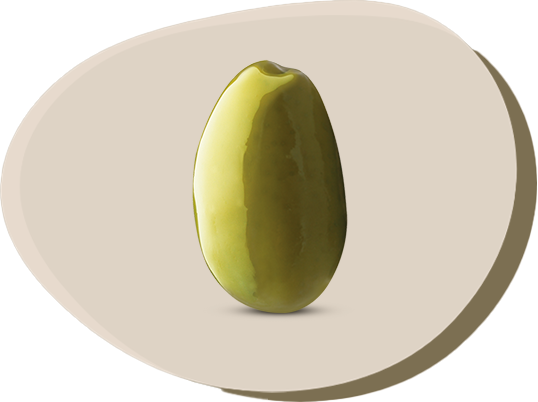
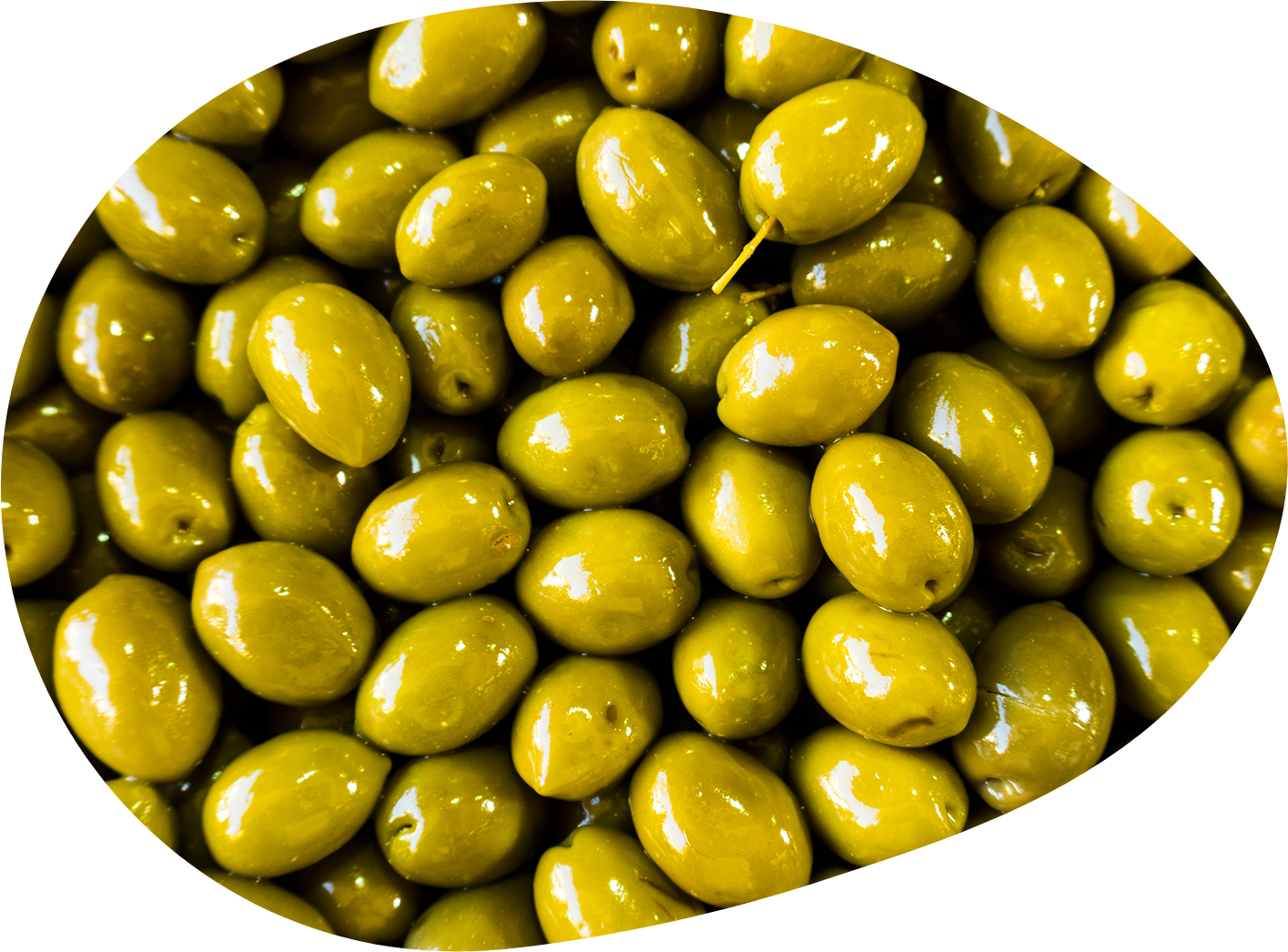
The drupe of Bella di Cerignola is very large and heavy, elongated-elliptical and asymmetrical in shape. The skin shows numerous small lenticels. As a table olive, it is valued for its size and for the specific sensory profile of the variety, although the flesh tends to be firm and fibrous, with poor detachment from the stone. Productivity is medium and alternating; the drupe shows high resistance to detachment. The cultivar has notable agronomic requirements. Vigour is medium, root development is weak, and the tree shows a high percentage of ovary abortion. It enters production and ripens early; it is partially self-fertile but for good yields requires pollinator varieties, typically Mele, S. Agostino and Termite di Bitetto. The plant is susceptible to cold and to various pathogens, such as olive knot and sooty mould.
Did you know...
Bella di Cerignola is a renowned and prestigious Apulian olive, with a history rooted not only in the similarly-named city but across much of what was once ancient Daunia, today known as the Tavoliere delle Puglie. It is no coincidence that its PDO is named “La Bella della Daunia”, and that the production area described in the regulations extends beyond Cerignola, encompassing part of the municipal territories of Orta Nova, Stornarella and Trinitapoli, as well as the entire lands of San Ferdinando and Stornara. The cultivated area produces almost 5,000 tonnes of olives, but only 118 of these are PDO-certified.
Nocellara del Belice is one of the most scientifically studied olive cultivars, with a remarkable volume of literature considering the type of product. The studies do not focus on a single area but range from quality control of the fresh product, to the search for suitable starter cultures, to process characterisation, product shelf-life, traceability and finally nutritional properties.
One particular study focused on the use of specific lactobacilli to preserve the olive, rather than as starters for its fermentation. The aim was to determine whether quality, safety, sensory and physical-chemical parameters could be improved by using a bio-preservative instead of the traditional ascorbic, citric and/or lactic acids. A comparison between the two methods, based on samples packaged and stored at 4°C, showed that the use of specific lactobacilli improved pH values and olive firmness. It also more rapidly reduced the presence of pathogenic microorganisms, while allowing the use of less salt and half the amount of brine. Another nutraceutical study on Bella di Cerignola highlighted that naturally fermented olives contain a considerable amount of bioavailable antioxidants, making them a healthy food when included in a balanced diet.
Finally, sensory evaluations from various editions of the Monna Oliva competition indicated that naturally fermented Bella di Cerignola (without lye treatment) show improved kinaesthetic properties with firmer, less fibrous flesh, and greater ease of stone detachment.


