

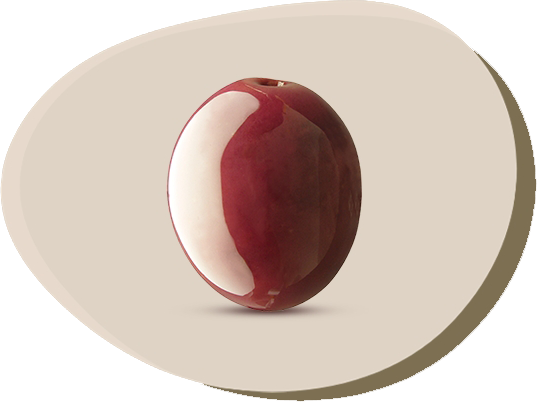
Gaeta Olive
Botanical name
Olea europea var. Itrana.
Origin
Italy, Lazio, particularly the provinces of Rome and Latina.
Harvest period
For green olives, from October to November; for semi-ripe olives, from November to January; for black olives, from March to April. Timing may vary depending on the year. Moreover, Itrana ripens late, reaching full pigmentation in February–March.
Food pairings
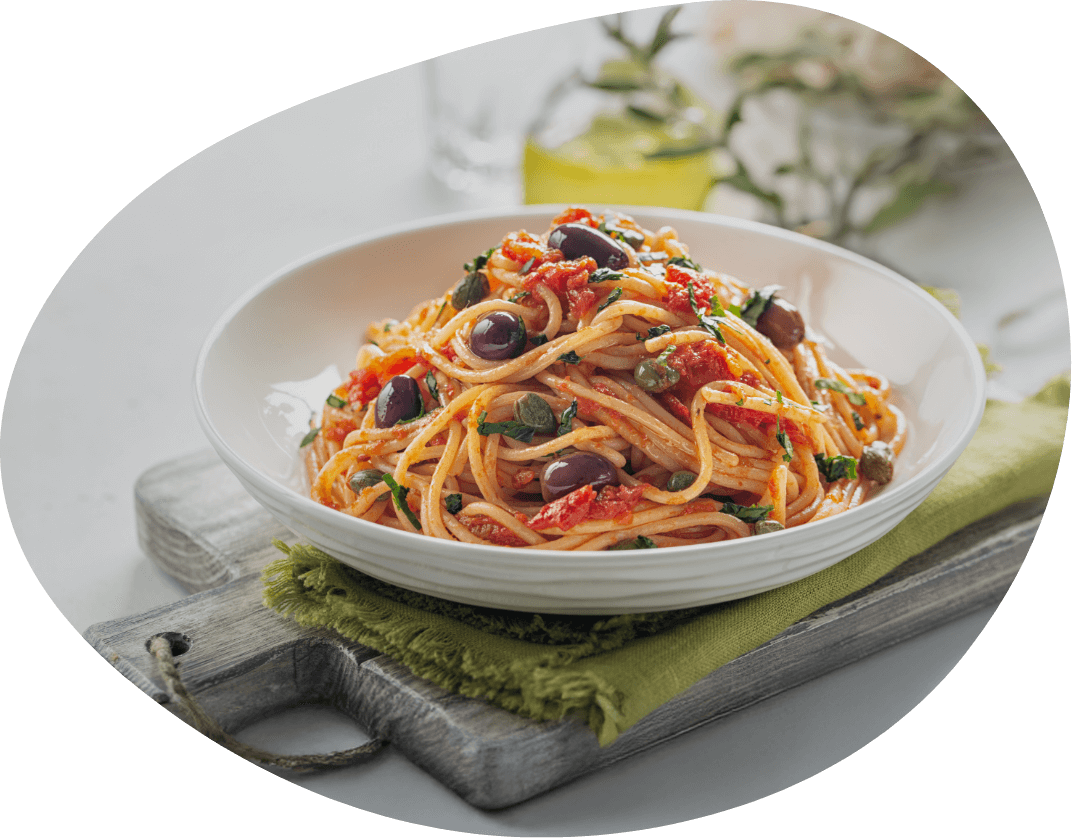
Oliva di Gaeta olives have a distinctive taste: savoury, slightly bitter and tangy. On the nose and palate, this olive offers fruity notes reminiscent of plum, blackberry or red fruits more generally, as well as must or wine, with hints of vinegar. The flesh is firm yet tender, with a slight crunch. Itrana Bianca shares the same savouriness and acidity, but with more pronounced (though not excessive) bitterness. Its aromas are more herbaceous. The flesh is firm, compact and crunchy, without being excessively hard or fibrous. Oliva di Gaeta olives are famous in cooking as an ingredient in traditional dishes. Among pasta dishes, “spaghetti alla puttanesca” stands out; among mains, “polpo alla luciana” and “baccalà alla napoletana”. As side dishes, sautéed escarole is common. Fomous one-dish meals include the “tiella di Gaeta”. Itrana Bianca, on the other hand, pairs beautifully with vegetables. It is excellent in salads, in aubergine caponata (in place of the traditional Sicilian olive varieties), and on focaccia.
Drink
pairings
Natural black olives (Oliva di Gaeta) can be enjoyed with a Cesanese del Piglio or a Pinot Noir, both with fruity notes, dry flavour and good acidity. For those who prefer lighter wines, a Rosato del Salento, or for white wine lovers, a Fiano or Pinot Bianco. For Itrana or Oliva Bianca (green or semi-ripe olives), whites such as Fiano, Grechetto, Falanghina or Coda di Volpe make excellent pairings.
Characteristics
Itrana is a dual-purpose cultivar. Best known as the black table olive (Oliva di Gaeta), its green and semi-ripe version (Itrana Bianca) is also gaining popularity, as is its extra virgin olive oil, winner of numerous competitions and listed in all major guides. The drupes are large, elliptical and asymmetrical in shape, with rounded base and tip. They have a high flesh-to-stone ratio and cling strongly to the tree. The skin shows numerous, large lenticels. The flesh separates very easily from the stone, both in green olives and in well-ripened (black) ones. The plant tolerates cold and major fungal diseases well but is sensitive to olive fruit fly attacks. It is vigorous and hardy, with high but alternating productivity. It is a self-incompatible variety, requiring other olive trees (typically Leccino and Pendolino) as pollinators for good yields.
Did you know...
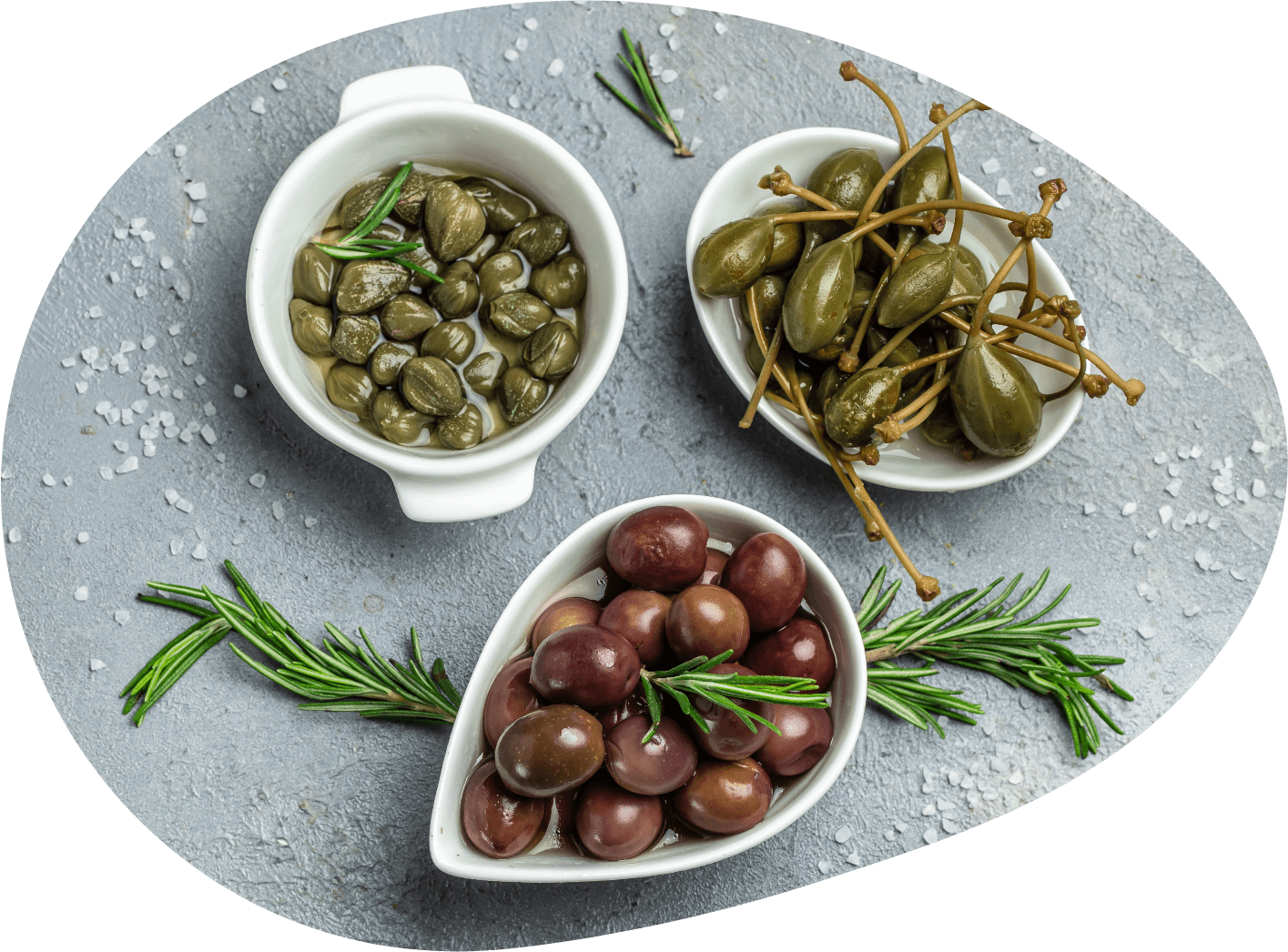
Few olive cultivars boast a tradition as rich as that of Itrana. Almost every aspect of this olive carries a story or legend. The oldest tells of Aeneas and his men, who, while sailing along the Pontine coast before landing in the Gulf of Caieta (modern Gaeta), collected small black fruits from the sea, pleasant on the palate, their bitter flavour mingled with the salt of the water. These were none other than the first Oliva di Gaeta in brine – Itrana drupes fallen into the sea from coastal trees.
The name comes from the port, from the many barrels marked “GAETA” that were shipped to markets. In the Middle Ages, Gaeta was the main political and economic hub of the southern Pontine area. Ships left loaded with oil, olives and soap. Although the goods came from across lower Lazio, for buyers, they were simply products of Gaeta. Hence the name given to the olives, still in use today. While this may overlook the nearly 20,000 olive growers spread across the nearly 90 km of territory from Castelforte to Rocca Massima (the Oliva di Gaeta PDO production area is even larger), changing the name of a product that is already a recognised global brand would now cause significant commercial damage.
Famous olives like Itrana are also prone to counterfeiting. To combat agri-food piracy, EU protection was requested in the form of Protected Designation of Origin (PDO). The process began in 1997 with the establishment of Coprog (Comitato produttori olive di Gaeta) and concluded in 2016 with the regulation’s publication in the Official Journal of the European Union. The “Itrana method”, as defined in the PDO specifications, involves allowing natural lactic fermentation to begin without the immediate addition of salt or synthetic acidifying agents. The drupes are placed in containers and submerged in potable water. They remain in this state to allow natural fermentation to develop, at the end of which the pH must be ≤ 4.5. Only then is table salt added to the liquid, at no more than 7 kg per 100 kg of fresh drupes, to obtain the brine. After at least 5 months of salting, the olives are ready to be packaged as “Oliva di Gaeta” PDO.
But Itrana is not only “Oliva di Gaeta” PDO. As mentioned, green and semi-ripe olives can also be processed with the Itrana method to make Oliva Bianca. An alternative method involves two-stage fermentation: adding half the salt at the start (first stage), and the rest after about 20 days. The second stage lasts around 4–6 months. Sometimes the Greek method is used, with the immediate addition of salt. There are also four other traditional but lesser-known methods: “schiacciate” (crushed), oven-baked, smoked and water-cured olives. Olive “schiacciate” are green olives crushed with a stone, soaked for 5–10 days with the water changed 1–2 times a day, then seasoned with oil, salt, garlic and various herbs. When bread was still baked at home, after bread-making the oven was used overnight to bake black olives all night. The next day, the olives were ready to be eaten. Smoked olives were dried over the traditional brazier at the centre of the home. The water-cured method, on the other hand, involved leaving green olives in a paste of water, ash and lime, and rinsing them when they were ready. The ancestor of today’s “Sevillian method”.
Various studies have focused on the characterisation of microbial flora to develop starters suited to production standardisation. All results confirm that suitable starters not only regularise production but also promote oleuropein degradation, generate appropriate sensory notes and lower pH to safe levels. For Oliva di Gaeta PDO, however, the specifications prohibit the use of selected microflora. Nevertheless, spontaneous fermentations have also been studied. One study on Oliva di Gaeta PDO correlated the length of time spent in water and the amount of salt used with different product characteristics, including sensory ones. Longer soaking (30 vs 15 days) produces generally more bitter and acidic olives. Shorter soaking leads to the development of “winey” aromatic notes. Higher salt content (8% vs 6%) results in olives that are generally crunchier and saltier. Lower salt with longer soaking produces olives with fruitier aromas.


