

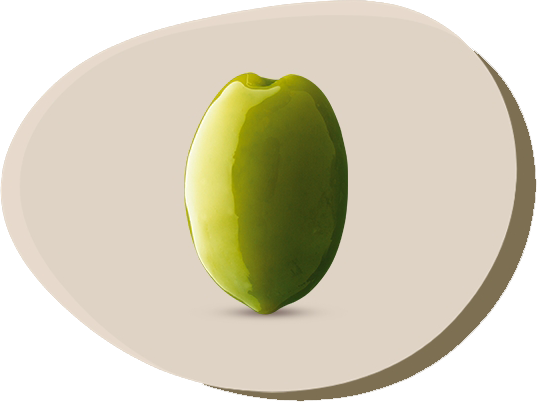
Halkidiki Olive
Botanical name
Olea europea var. Halkidiki.
Origin
native to the Chalcidice peninsula in Greece (Halkidiki or Chalkidiki in Greek).
Harvest period
Halkidiki is primarily a table olive cultivar, so harvesting takes place before full ripening, generally between late September and early October. At this stage, the olives are still green, and this characteristic preserves their firm texture and bright colour, even after processing.
Food pairings
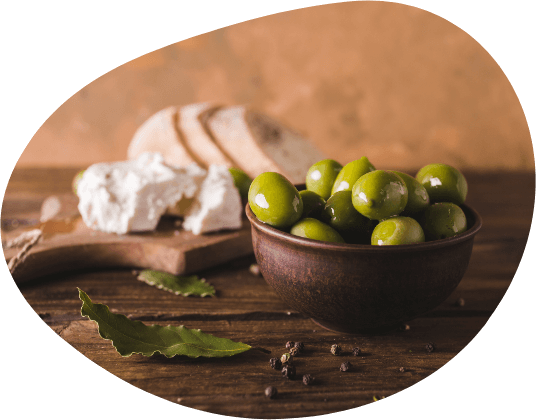
in Greece, it is traditionally eaten on its own (Greek-style fermented, i.e. natural) as an appetiser, alongside other “mezedes”, the Greek equivalent of the more famous Spanish “tapas”. In particular, it pairs well with fresh cheeses, raw vegetables and aromatic herbs. It is also excellent with yoghurt-based sauces such as tsatsiki. Given its large size, it can be stuffed with whole almonds, pepper strips or garlic cloves.
Drink
pairings
Sauvignon Blanc and Albariño, as international grape varieties. Verdicchio and Prosecco for Italian options. In general, a fresh wine with medium-high acidity. Sour beers, such as Berliner Weisse, also make a good pairing.
Characteristics
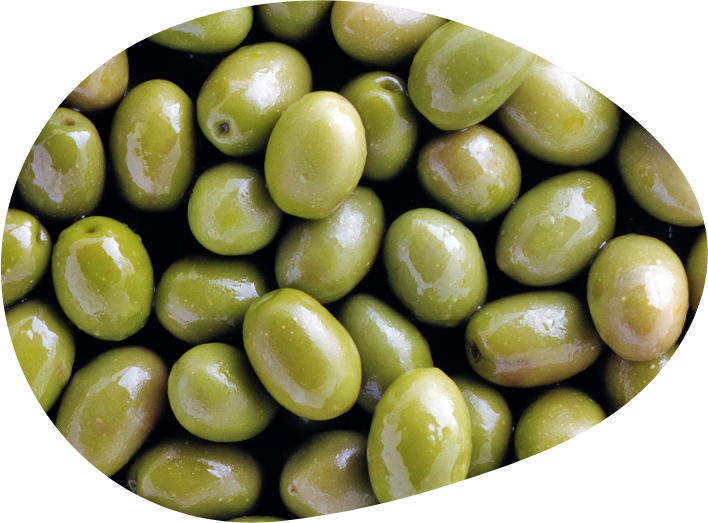
Halkidiki olives are large and very heavy. The skin shows numerous but small lenticels. The flesh separates easily from the stone, and the flesh-to-stone ratio is high. As a table olive, it is appreciated for its firmness and crunchiness. The Halkidiki olive tree has no particular distinguishing features, with average vigour, hardiness, rooting ability, onset of production, ovary abortion and productivity. However, it is resistant to drought and cold, making it well suited to the climate of the Chalcidice peninsula. The olives have medium resistance to fruit detachment, complicating mechanical harvesting, especially given the early harvest period.
Did you know…
Some studies show that Halkidiki olive leaves are richer in polyphenols than those of other varieties, especially when cultivated in vitro. This significant presence of phenolic compounds has also been found in the volatile fraction of the olive. This could make by-products of Halkidiki olive cultivation and processing valuable for recovering these antioxidants.
Cultivation of this variety is an integral part of the Chalcidice peninsula’s economy, although the area is also highly renowned as a tourist destination. For centuries, there has been a strong link between the inhabitants of Halkidiki and olive growing. Over the last fifty years, rainfall has decreased and temperatures have risen by an average of 1°C in the region, with the trees located in the driest areas. The impact of these changes on production has been studied. Projections suggest that in future, higher winter temperatures will reduce flowering and, consequently, yields (flower numbers in this variety are already low). With reduced rainfall, non-irrigated trees in summer may no longer be economically viable.
The Halkidiki olive has even… starred in a film! It appears in one of the opening scenes of The Wolf of Wall Street, when a seasoned stockbroker (Matthew McConaughey) offers one to a newcomer (Leonardo DiCaprio), specifying its name in Greek. Eating the olive carries a symbolic meaning: through this gesture, DiCaprio’s character accepts his entry into the world of speculative finance.


