

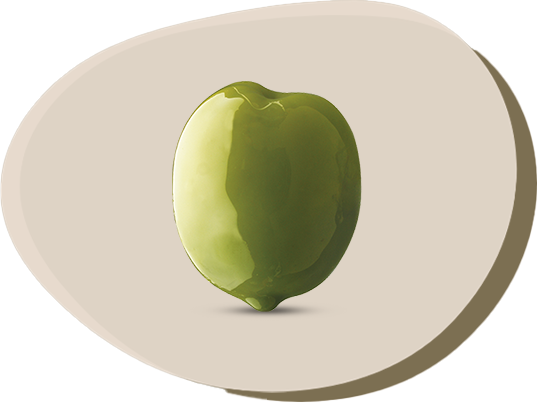
Nocellara del Belice Olives
Botanical name
Olea europea var. Nocellara del Belice.
Origin
Italy, western Sicily, particularly in the Valle del Belice.
Harvest period
Nocellara del Belice is a dual-purpose cultivar, harvesting usually takes place when the olives are still green, between mid-September and early October, but can extend until mid-November. There are also naturally fermented and lye-cured products that make use of ripe olives. Harvesting the olives green has the advantage of retaining their firmness and crispiness, especially if they are to be processed using the Sevillian or Castelvetrano methods, which employ lye to remove bitterness and could otherwise over-soften the flesh.
Food pairings
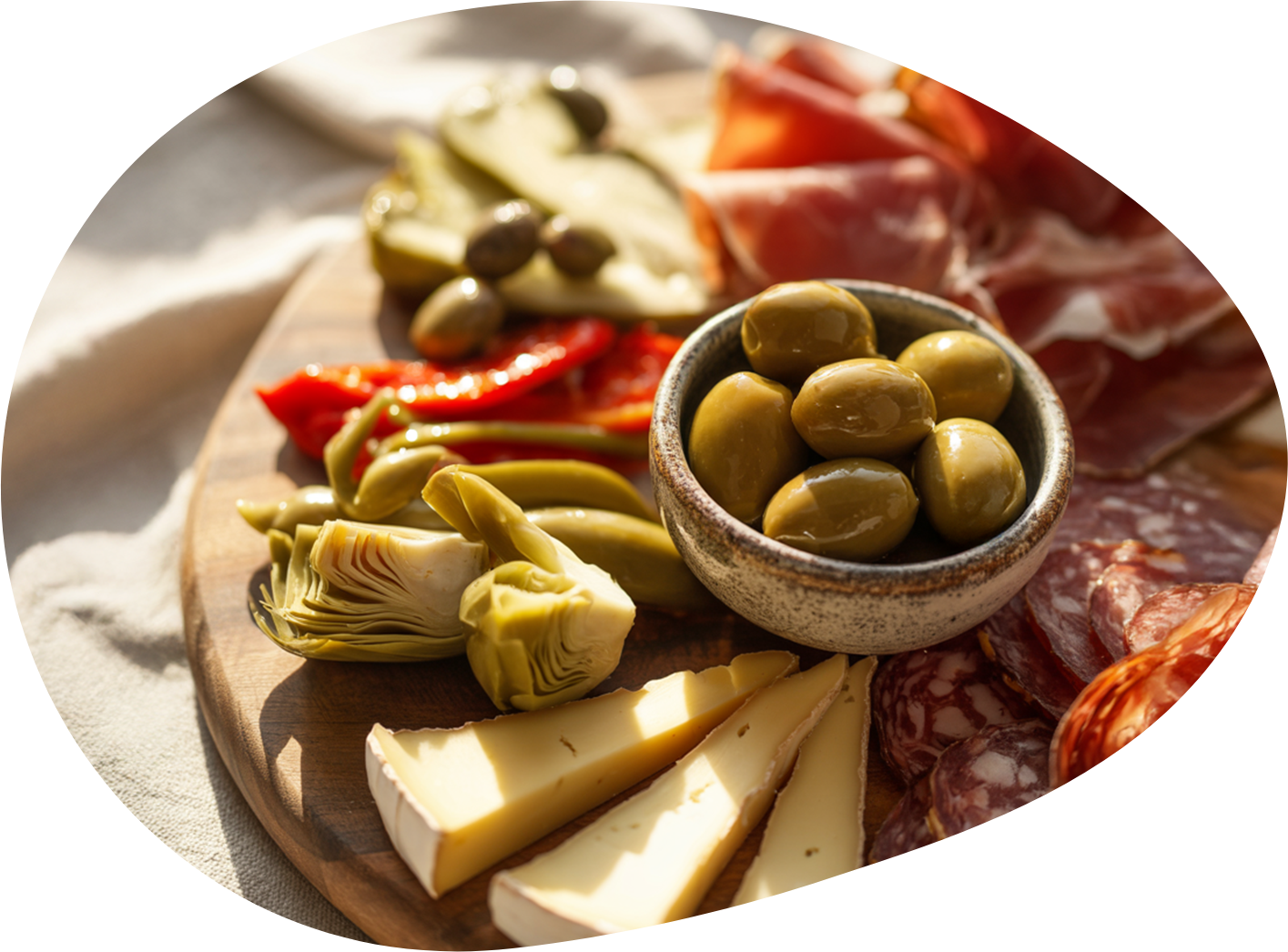
Given the traditional lye treatment, which creates a very distinctive final flavour profile, Nocellara del Belice is not normally used as an ingredient in long-cooked dishes. It can be paired with various local products such as cheeses, cured meats and pickled vegetables, or included in special fresh or lightly cooked vegetable dishes, where it combines well with peppers, aubergines, courgettes and almonds.
Drink pairings
The Sicilian wine trio par excellence – Inzolia, Grillo and Catarratto – pairs perfectly with this olive. For those who prefer something slightly sweeter and more international than a dry wine, a Weissbier makes an excellent match. If the olives are seasoned, then Nero d’Avola or Etna Rosato are well suited.
Characteristics
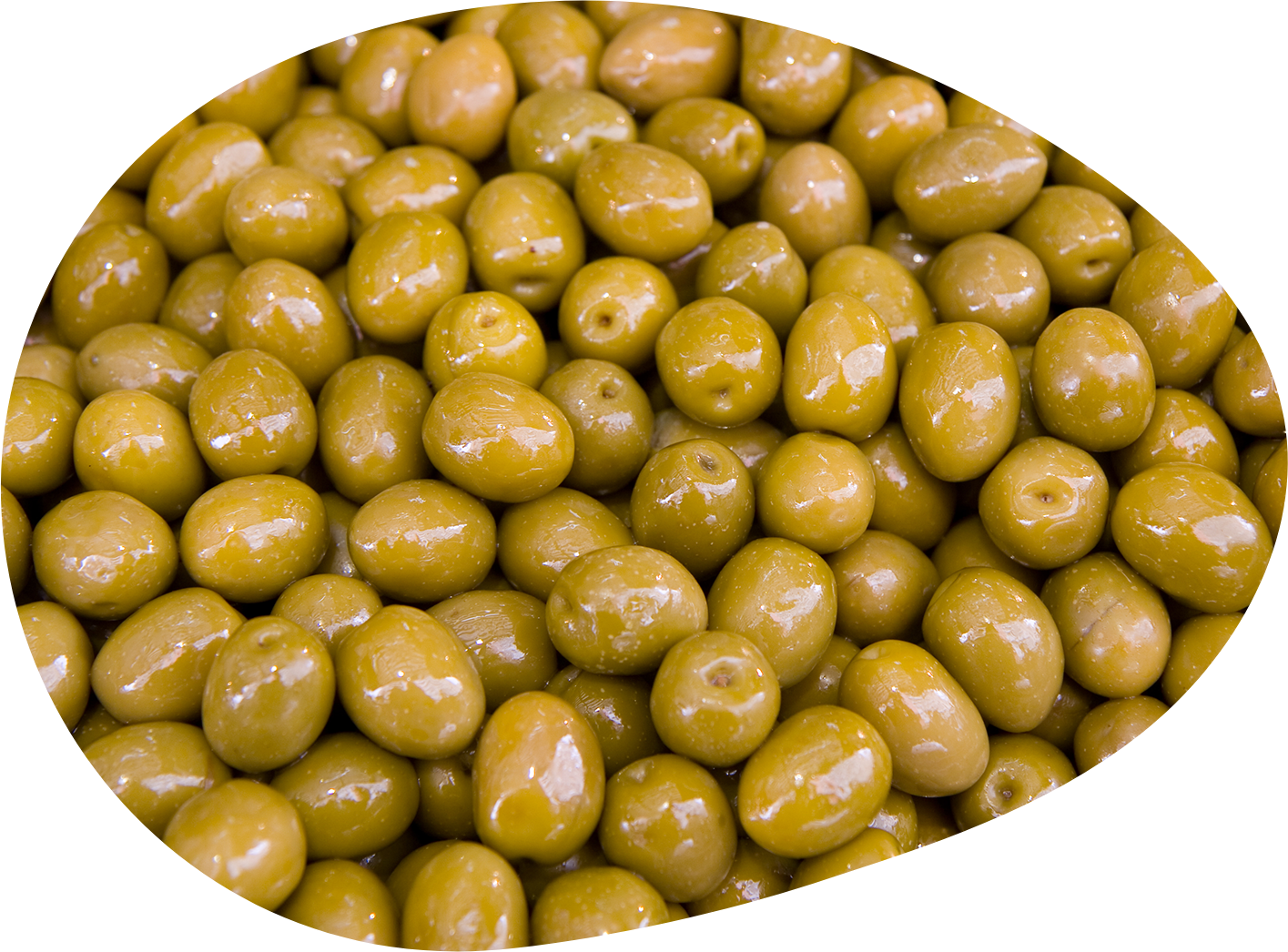
The drupe of Nocellara del Belice is relatively large, with a high flesh-to-stone ratio, spherical but slightly asymmetrical in shape. The skin shows numerous small lenticels. The flesh detaches easily from the stone. As a table olive, it is appreciated for its firm texture and crispness, and for the distinctive flavour resulting from the Castelvetrano method, the most widely used and recognised preparation technique. Nocellara del Belice is a plant of modest growth, with low to medium vigour and good adaptability to different environmental conditions, and a high capacity for root development. It comes into production early but requires pollinator varieties, usually Giarraffa. Productivity is high and consistent. The tree is susceptible to various pathogens and, among Sicilian olive cultivars, is one of the most affected by the olive fruit fly, due to the drupe’s size.
Did you know…
The economy of the Valle del Belice has always depended on the fertility of its soil. Castelvetrano, the valley’s main town, rises on a hill 200 metres above sea level, offering a spectacular view of the mountains, sea, and, of course, the olive groves. The Nocellara del Belice olive has a very ancient history, and in the valley one can still admire the remains of the ancient city of Selinunte, a Greek colony founded in the 7th century BC, which for a long time was a key reference point for olive oil production. Among its ruins, stone mills can still be seen near the temples. Today, Nocellara del Belice table olives remain largely a craft product, with important sensory, physical and chemical differences from one producer to another.
Nocellara del Belice is also one of the most scientifically studied olive cultivars, with a remarkable volume of literature considering the type of product. This is because a large part of western Sicily’s fruit and vegetable sector is linked precisely to table olives. Most of these studies focus on the quality of the processed product and its sensory and nutritional properties. In particular, one of the first (if not the first) pilot studies on the nutraceutical properties of table olives was carried out precisely on Nocellara del Belice olives. The research showed potential anti-inflammatory and antioxidant properties, together with a reduction in fatty mass and an increase in lean mass, following the daily consumption of 12 naturally fermented green table olives for 30 days. In another study, 49 strains of lactobacilli were isolated, several of which showed probiotic potential. A different group of researchers even isolated a new molecule with anti-inflammatory action, naming it “nocellaralactone”. Since it was found in the olive mill wastewater of Nocellara del Belice olives, it is likely also present in the fruit processed for table olives.
Nocellara del Belice is also the only olive subjected to a very particular preparation method known as the “Castelvetrano method”. Essentially, the olive is treated with lye, as in the “Sevillian method”. However, unlike the latter, the olives are not rinsed and fermented in brine; instead, salt is added directly to the fermentation barrels. After a few months, the olives are ready for consumption. In fact, one study indicated that olives produced using this method are ready much earlier than with the Sevillian method – one month for the first versus seven for the second. It seems that with the Castelvetrano method, after just a few weeks, the oleuropein is already significantly reduced. After one month, moreover, olives treated with the Castelvetrano method contained more antioxidants than those treated with the Sevillian method. Different technological processes have a crucial impact on the final aromatic compounds of table olives. For Nocellara del Belice, the three essential fermentations – alcoholic, heterolactic and propionic – are always present regardless of the method used. The Castelvetrano method, however, shows higher ethanol and lower organic acid content, with a greater presence of yeasts, whereas the Sevillian method results in higher organic acid content, due to the propionic and acetic bacteria.
Nocellara del Belice was also the first Italian table olive to obtain PDO status from the European Community, in 1998. However, the PDO “Nocellara del Belice” – distinct from the PDO “Valle del Belice”, which applies to extra virgin olive oil – does not prescribe the Castelvetrano method as the only authorised production process. What matters is that the olive belongs to the cultivar in question, is grown in the territories designated by the Region of Sicily (the municipalities of Castelvetrano, Campobello di Mazara, and Partanna in the province of Trapani), and complies with the agronomic parameters established by the regulations.


