

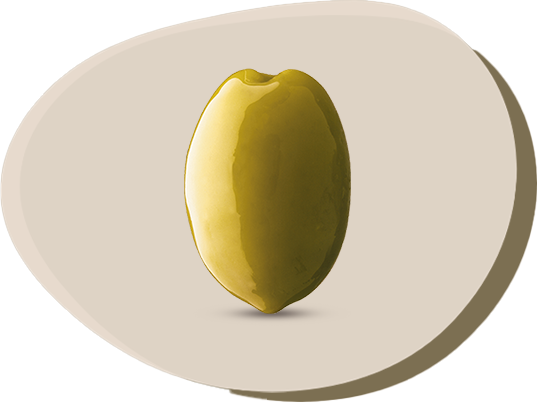
Nocellara Etnea Olives
Botanical name
Olea europea var. Nocellara Etnea.
Origin
Italy, eastern Sicily, particularly in the Mount Etna area.
Harvest period
Nocellara Etnea is considered a dual-purpose cultivar, although its oil yield is low, while the olive itself is well suited to curing. It is grown on the slopes of Mount Etna. Harvesting generally takes place when the olives are still green, usually from mid-September through to December. Table olives are mostly processed while still green, although products made from mature olives also exist. The green table olives have firm flesh with a crisp texture and little fibre.
Food pairings
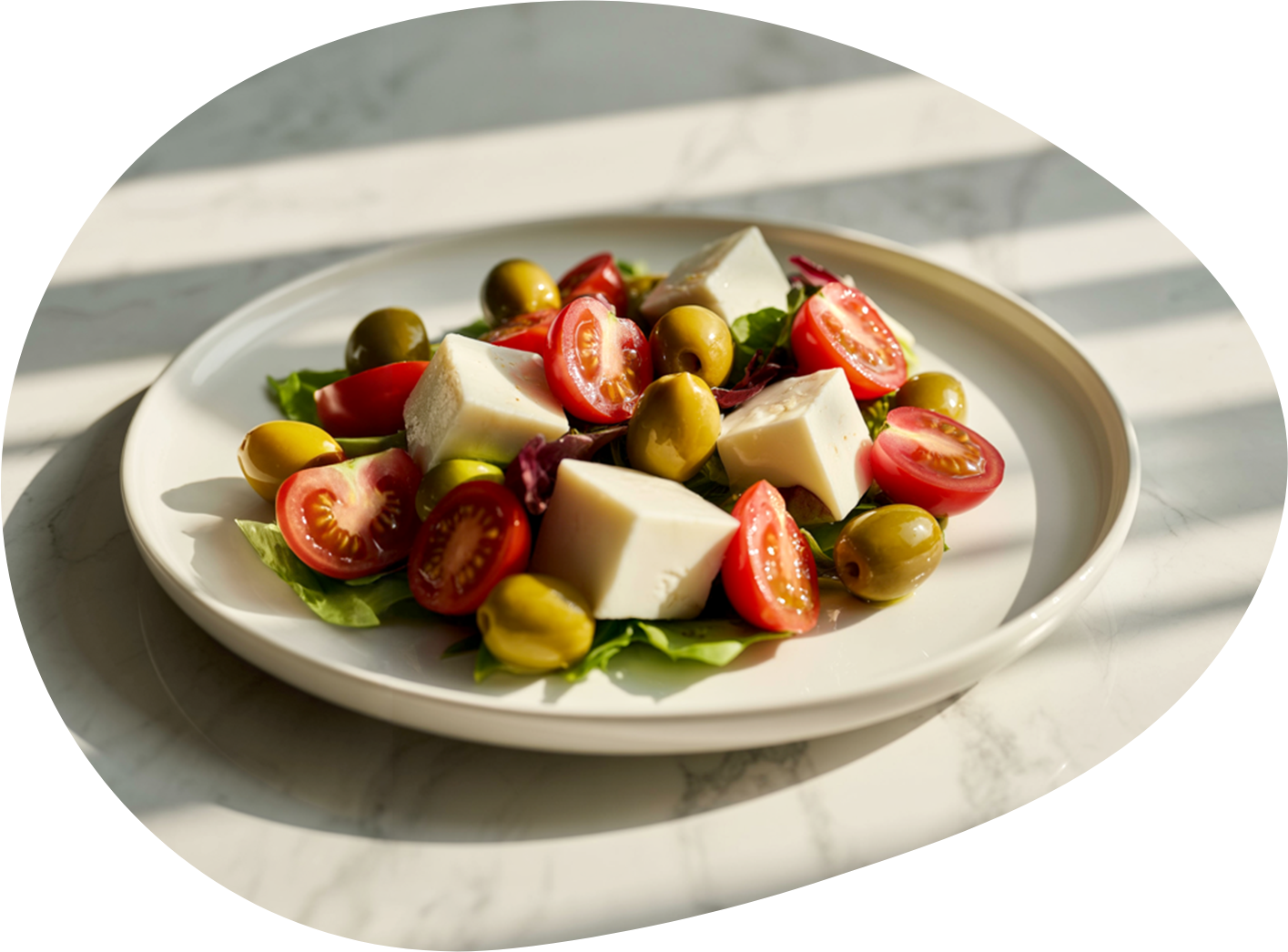
Nocellara Etnea is often sold “cunzata”, i.e. seasoned, prepared using the crushing method. In this form, the olives are the perfect accompaniment to mixed starters of cheese and cured meats, or to vegetables and greens, whether served in salads or cold soups.
Drink pairings
Nocellara Etnea “cunzata” (seasoned) pairs best with fresh, acidic wines that also have good structure. If you’re in Sicily, you can try them with Etna Bianco or Etna Rosato. Beyond the region, Verdicchio dei Castelli di Jesi, Greco di Tufo, or an international Pinot Bianco are all suitable choices. For reds, a young Sangiovese with good acidity and structure but light tannins is recommended.
Characteristics
The drupe of Nocellara Etnea has both a high weight and a high flesh-to-stone ratio, with an elliptical and slightly asymmetrical shape. The skin shows few but large lenticels. It is excellent as a table olive because of its uniform size, firm flesh and resistance to curing. In addition, its relatively low total polyphenol content favours fermentation. The tree is vigorous, hardy and fast-growing. It comes into production early, but requires pollinator varieties, usually Zeituna, Biancolilla or Moresca. Flowering is abundant, and the plentiful pollen germinates with great ease. Productivity is high but alternating. The tree is particularly tolerant to olive knot, olive fruit fly and sooty mould.
Did you know...
Popular beliefs say this olive has absorbed the strength and energy of the volcano, manifested through its distinctive flavour. There is no doubt that Etna’s volcanic soil gives a unique terroir to the products cultivated there, making it difficult to cultivate Nocellara Etnea elsewhere and achieve the same unique qualities.
Nocellara Etnea has been used as a basis for studying the development of microorganisms during natural fermentation. The results show clear improvements in both the quality of its sensory properties and safety thanks to the use of suitable starter cultures. At the same time, it appears that the level of salt needed to obtain a valid product in terms of its sensory properties and the probiotic potential of its microbial flora may be as low as 4%, if fermentation is assisted with starters. This could pave the way for products with probiotic properties and, at the same time, a very low salt content, considering the category to which they belong.
The “Olivette di Sant’Agata”, among the most iconic and widely enjoyed sweets in Catania during the city’s patronal feast, are thought to have been inspired by the Nocellara Etnea, a variety very common in the area. “Olivette” are made of green almond paste and coated in sugar, recalling the shape of the olive and linking back to a miracle attributed to the Catanese saint.


